Machining Modeling Intensive
Accelerating On-Time Delivery and New Product Introduction by Reducing On-Machine Trials
March 25 – 27, 9 am – 4 pm
CCAT Digital Thread Lab
222 Pitkin Street, Suite 101
East Hartford, CT
In this 3-day intensive, the Connecticut Center for Advanced Technology, in partnership with Third Wave Systems, will guide engineers, machinists, and programmers to deliver complex components faster while maintaining quality standards within a model-based engineering (MBE) workflow.
Traditional trial-and-error machining approaches often lead to delays, scrap, and cost overruns. By understanding heat generation and material stress during the machining process, engineers gain insights that are difficult or impossible to capture through physical machine trials alone. Machining Modeling Intensive is a hands-on workshop that shows participants how to evaluate machining strategies, reduce cycle times, and determine toolpaths with confidence before cutting a single chip.
You Will Learn How to:
Use virtual prototyping to significantly reduce on machine trials
Guide toolpath strategies while maintaining part quality by minimizing distortion and deflection
Track material stress to improve first pass yield and overall process reliability.
-
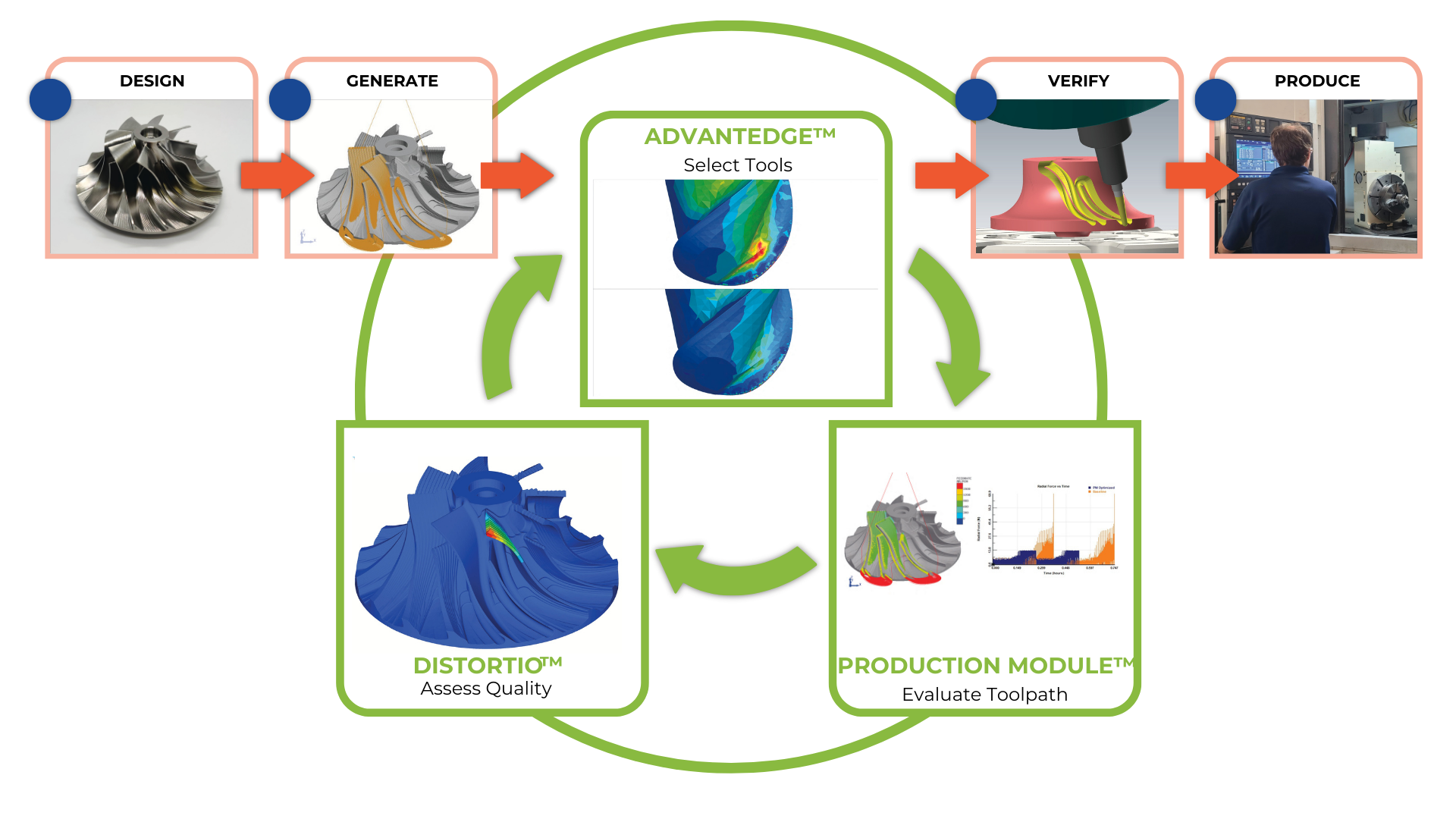
Machining Modeling Intensive is a three-day program featuring scenario-based courses that use an industry relevant part, material, and real-world application to demonstrate an end-to-end solution with Third Wave’s machining modeling software.
Day 1
Machining Modeling in the Model-based Definition (MBD) Workflow with Third Wave Systems
Introduction to the Course Project & Machinability Studies using AdvantEdge
Day 2
AdvantEdge Machinability Study Guided Predictive Toolpath Evaluation with Production Module
Pick the best strategies with toolpath analysis using Production Module
Day 3
Part Quality Analysis for Toolpath Strategy Decisions using Distortio and Production Module
Adding Third Wave Machining Modeling Tools to the Digital Thread to Multiply Process Improvements
-
Previous CAM experience is recommended for this course.
-
By the end of the course, attendees will be able to apply machining modeling within the digital thread by analyzing and integrating modeling results directly into the toolpath generation process. This approach reduces reliance on physical testing, shortens verification time, lowers costs, and improves part quality and cycle times and enables 5 to 10 times faster time-to-market.
-
March 25 – 27, 9 am – 4 pm
CCAT Digital Thread Lab
222 Pitkin Street, Suite 101
East Hartford, CT